
Sometimes it’s the outline of your face, more than any single wrinkle, that catches your attention. Your jawline may look softer, or your lower cheeks may seem to sit a little differently. If those changes bother you, a Nova Thread Lift may offer a subtle way to reposition loose tissue without a surgical facelift.
The treatment uses dissolvable threads placed beneath the skin. Read on to learn how that support works, who tends to benefit, and what to expect before making room for treatment in your calendar.
How the Lift Happens
A Nova Thread Lift uses NovaThreads made from polydioxanone, usually shortened to PDO. This absorbable suture material can provide support beneath the skin while prompting a local healing response. Different thread designs serve different purposes, so the treatment plan matters just as much as the product name.
A PDO thread lift is minimally invasive. It involves small entry points and material placed into tissue, even though it avoids the larger incisions associated with facelift surgery. Here’s how those details come together.
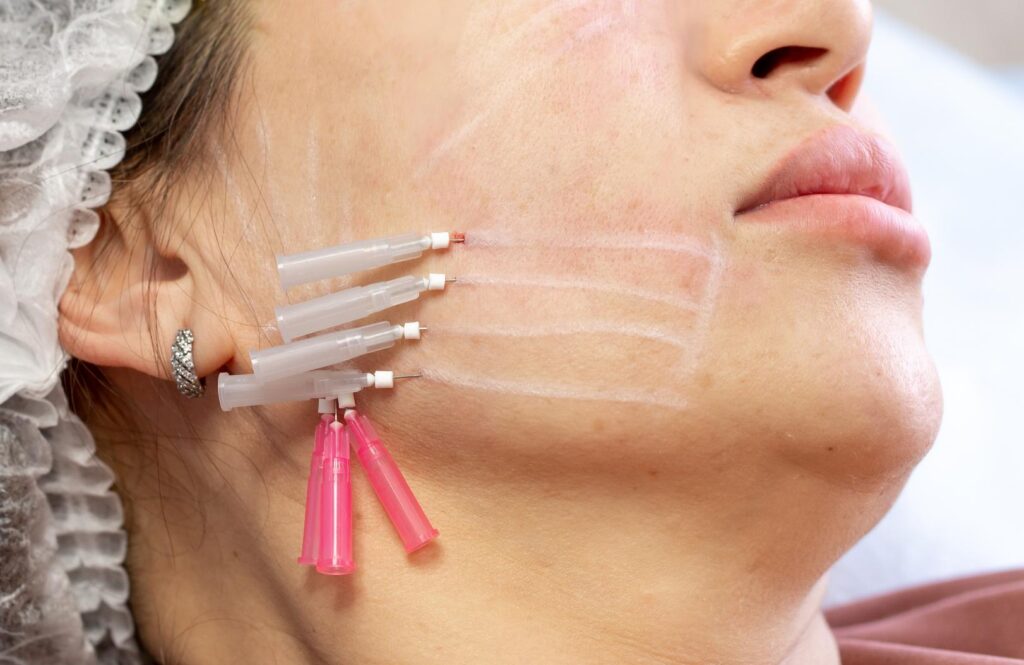
1. Repositioning Loose Tissue
Barbed threads create the immediate lifting effect. Small projections along each thread engage the surrounding tissue, allowing the provider to reposition it in a planned direction. Once the thread is placed, that grip helps support the adjusted tissue.
For suitable patients, this can soften the appearance of early jowls or improve definition along the lower face. The change is generally modest. Threads don’t remove extra skin, so they have less ability to correct substantial sagging than surgery.
Think about the specific change you’d like to see. Perhaps the transition from your cheek to your jaw looks less defined than it once did. Your provider can assess whether repositioning that tissue is likely to help. This makes the conversation more useful than asking for the strongest possible pull, which may not create the most flattering result.
2. Encouraging New Collagen
The response around a thread continues after placement. Your body recognizes the material and starts a healing process that includes collagen formation. Collagen is one of the structural proteins that gives skin support, and its production and organization change with age.
That response is why thread treatments are discussed in terms of both lifting and skin quality. The mechanical lift happens with placement, while tissue remodeling takes more time. These are related effects, but they aren’t interchangeable.
Collagen stimulation doesn’t mean every patient will develop visibly tighter skin or keep the same lift after the threads dissolve. Research supports a tissue response around PDO, while the size and durability of the cosmetic benefit vary.
Your provider should explain which change the chosen technique is intended to create, rather than treating collagen production as a promise of permanent lifting.
3. Choosing the Right Threads
Not every thread is designed to lift tissue in the same way. NovaThreads includes smooth, twisted, and lifting designs. Understanding the distinction helps you follow the recommendation instead of assuming that all PDO treatments produce the same result.
Smooth threads don’t have the gripping projections used for suspension. They’re generally selected for goals involving collagen stimulation and skin quality. Barbed or molded designs engage tissue and are used when repositioning is the priority.
When discussing dissolvable lifting threads, ask which design your provider recommends and why. The answer should connect to your anatomy and the concern you’re treating.
Thread number alone doesn’t tell you how good a result will be. Placement, tissue characteristics, and a realistic degree of correction all influence the plan.
4. Working With Your Features
A thoughtful lift starts with looking at your face as a whole. The provider assesses where tissue has descended, how much movement is possible, and how a change in one area could affect another. Photographs can help establish a consistent starting point.
Early jowling, mild cheek descent, and selected areas of neck laxity may be considered. However, a softer jawline can involve more than loose skin. Volume changes, underlying structure, and fullness beneath the chin can also influence its appearance.
This is why a non-surgical facelift should begin with an assessment rather than a preset number of threads. The aim is an improvement that fits your features. If a different concern is driving the change you notice, another treatment may be more appropriate.
5. Using Small Entry Points
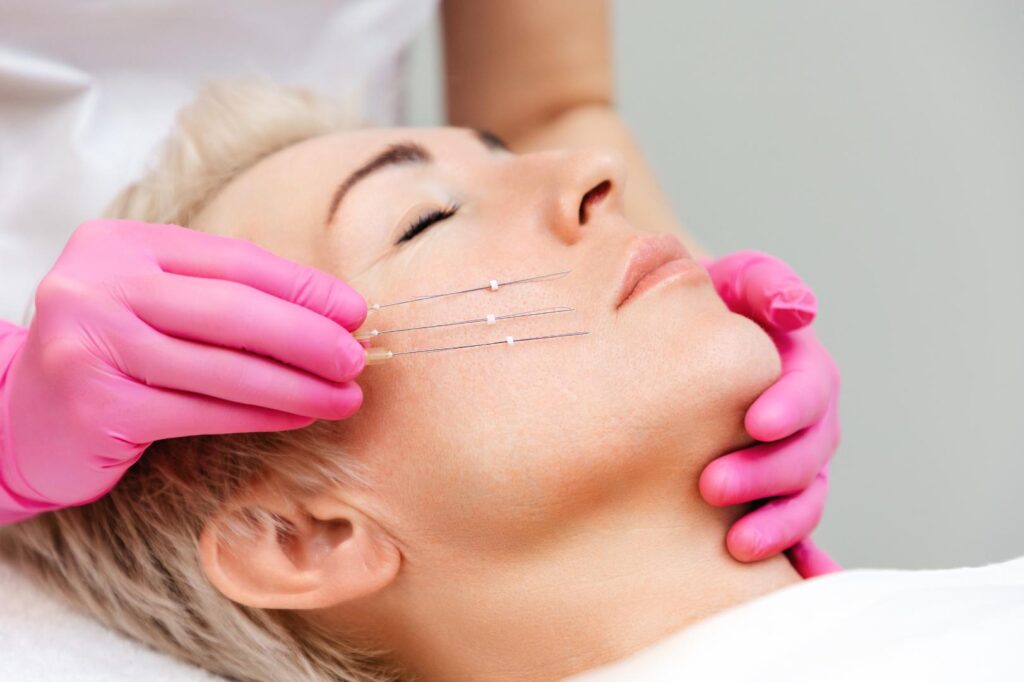
Threads are introduced beneath the skin through small openings using a needle or cannula. The provider positions the selected threads, checks the tissue response, and adjusts the plan as needed. This approach usually uses local anesthesia rather than general anesthesia.
It’s reasonable to ask, “Does a thread lift hurt?” Numbing medication helps reduce discomfort, although the anesthetic injections can sting. Patients may notice pressure or a pulling sensation during placement. Speak up if anything feels painful so your provider can respond.
At Simply Skin, a NovaThreads appointment generally takes about an hour, with numbing included in the process. The exact timing depends on the areas treated. You’ll also need time to review aftercare, ask questions, and understand how to contact the practice once you’re home.
6. Allowing a Shorter Recovery
A thread lift generally involves less recovery than a surgical facelift, but your skin still needs time to settle. Swelling, bruising, soreness, and a feeling of tightness can occur. Returning to desk work and feeling comfortable attending a photographed event aren’t necessarily the same milestone.
For thread lift recovery time, a useful planning point is that many patients look socially presentable within about three to five days. Some need longer, and healing can continue for several weeks. Leave extra room before an important occasion, especially if this is your first treatment.
Your provider will give instructions for cleansing, sleeping position, exercise, and avoiding pressure on the area. Don’t massage a dimple or try to adjust a thread yourself. Follow the activity restrictions for your particular treatment, even if you feel well enough to do more.
Complications can include infection, persistent dimpling, asymmetry, or a thread becoming visible or exposed. Increasing pain, spreading redness, drainage, or fever warrants prompt contact with your provider. These symptoms need assessment rather than waiting for a routine follow-up.
Who It Suits
Thread lift candidacy depends on your tissue and goals, rather than a birthday. Patients with early or mild sagging who want a subtle, temporary improvement may be better suited than those seeking a major change. Skin thickness and the weight of the tissue also affect what threads can accomplish.
The thread lift vs. facelift decision comes down partly to the amount of correction needed. A surgical facelift can reposition deeper structures and remove excess skin. Threads provide a more limited adjustment and won’t reproduce that degree of correction in patients with substantial laxity.
Choosing the smaller procedure only makes sense if its likely result matches what you want. Ask your provider to describe both the improvement they expect and what would probably remain unchanged. That gives you a clearer basis for deciding whether treatment feels worthwhile.
Before You Book
Your medical history helps the provider decide whether treatment is appropriate now. Bring an updated medication list and mention previous fillers, threads, facial surgery, and any problems you’ve had with healing. A few details deserve attention during the consultation:
- Blood thinners, supplements, and medicines that could affect bleeding or bruising.
- Active skin infections, allergies, and conditions that could interfere with healing.
- Pregnancy or breastfeeding, which may change whether elective treatment should proceed.
Don’t stop prescribed medication on your own. Your treating clinician should guide any changes and decide whether treatment needs to be postponed.
Ask about the provider’s experience with the proposed thread design and treatment area. You should also know who handles follow-up questions and what happens if an adjustment or complication needs attention. Those practical details are part of choosing care, even when the appointment itself is relatively brief.
It also helps to discuss the full treatment commitment. Ask what the fee includes, whether follow-up visits are included, and how additional treatment would be handled. Understanding those details makes it easier to compare the complete treatment plan with your own budget and personal priorities.
Results Over Time
The question “How long does a thread lift last?” has two parts. The PDO material dissolves over several months, but thread absorption and the duration of visible improvement are different processes. The face continues to age, and the amount of remaining lift changes over time.
Simply Skin describes results that may last up to about 15 months. Treat that as a possible outcome rather than a guaranteed schedule. Some patients notice the effect fading sooner, and published research leaves uncertainty about long-term durability.
A small prospective study followed 30 women treated with a different brand of barbed PDO threads. Improvements were still recorded at six months, which helps explain the interest in this approach. However, a study of that size can’t establish how every patient will respond or predict the duration of a NovaThreads result.
When reviewing thread lift before-and-after photographs, look for similar lighting, head position, and facial expression. Ask when the later photograph was taken and whether other treatments were performed. A picture immediately after placement can’t show how the result will look once swelling has settled.
Follow-up visits offer a better opportunity to judge progress and discuss future care. Repeat treatment should follow reassessment of your skin and goals. It doesn’t need to happen automatically because a certain number of months has passed.
Find Your Fit at Simply Skin
You don’t need to arrive knowing which procedure to choose. At Simply Skin in Pittsburgh, a Nova Thread Lift consultation can help you understand whether threads suit your degree of sagging and the change you’d like to see.
Schedule a visit to discuss the areas that concern you, the thread options, and a recovery plan that fits your life. We’ll help you explore a measured approach to facial rejuvenation, with clear expectations from the first conversation.